 JSON All-in-One

Generate Rust structs from JSON
Rust generation from JSON is valuable when you need a first struct draft and want field names, Option, nested arrays, and Serde attributes in front of you quickly. JSON All-in-One can infer Rust models from a local sample and generate plain or Serde-oriented output.
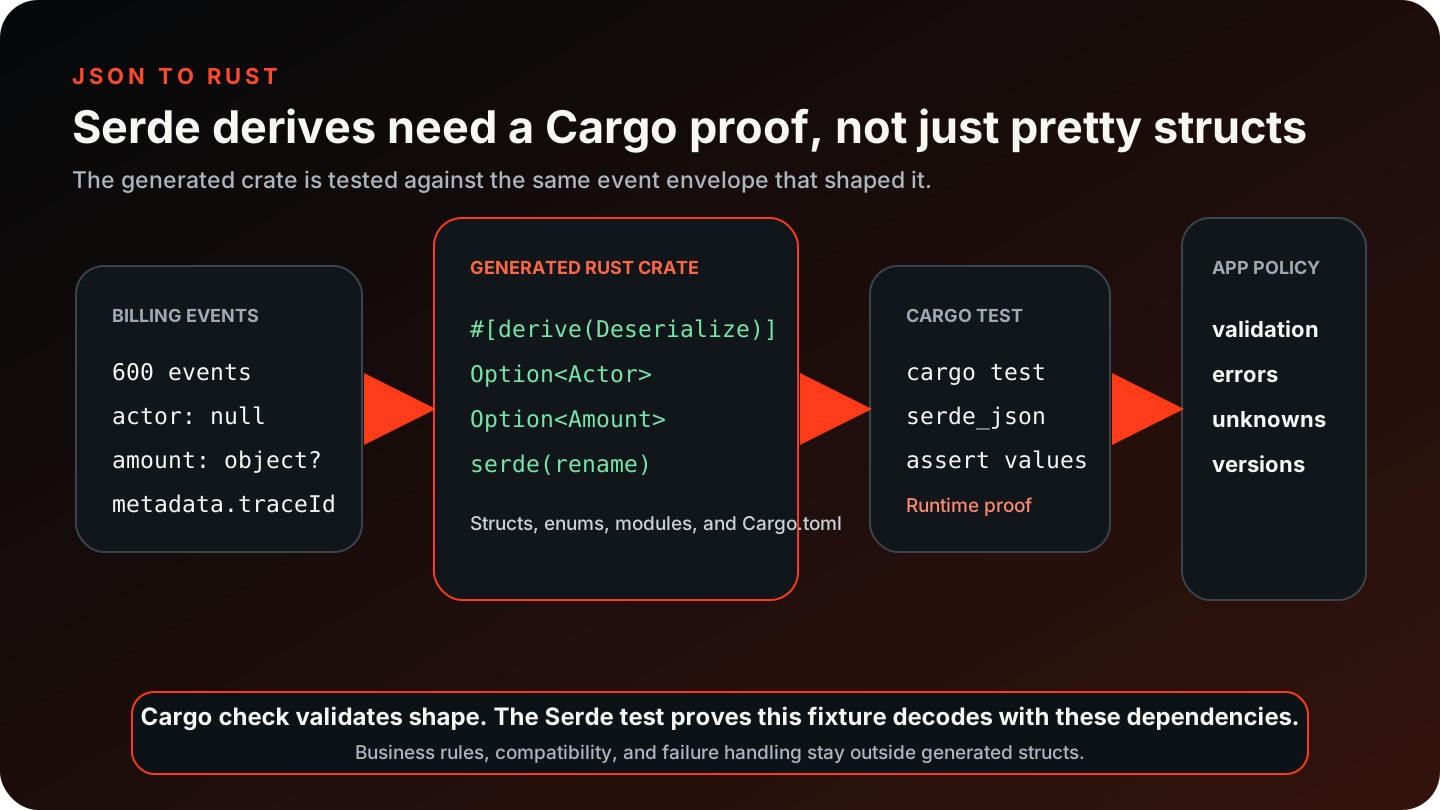
A generated struct is not the same as a working crate. Keep the generated code, the required Cargo.toml choices, and a fixture deserialization check as separate, visible steps.
Use a config/event sample with Rust edges
This webhook configuration includes snake_case keys, nested arrays, a nullable secret reference, and a nested rules object. It gives a Rust model enough texture to discuss Option, Serde output, serde_json::Value for unknown or null-only JSON values, and dependency features.
Use a small sample for the first decoding test. Compare the decoded field values with the original JSON, then add examples with missing fields, nulls, and unfamiliar values.
{
  "endpoint_id": "wh_01",
  "enabled": true,
  "delivery_modes": ["batch", "realtime"],
  "secret_ref": null,
  "retry_policy": { "max_attempts": 5, "backoff_seconds": [1, 5, 30] },
  "rules": { "kind": "prefix", "value": "/api/" }
}
Compare plain and Serde output
Rust exposes serde and None serializer options. Use Serde output when your next step is deserialization from JSON. Plain structs can still be useful for review, but they do not carry rename/derive behavior on their own.
The following excerpt shows the shape to look for. If your generated file uses different names, derives, or attributes, keep the generated code as the source of truth and adjust the integration example around it.
use serde::{Deserialize, Serialize};

#[derive(Debug, Clone, PartialEq, Serialize, Deserialize)]
pub struct WebhookConfig {
    pub delivery_modes: Vec<String>,
    pub enabled: bool,
    pub endpoint_id: String,
    pub retry_policy: RetryPolicy,
    pub rules: Rules,
    pub secret_ref: Option<serde_json::Value>,
}

#[derive(Debug, Clone, PartialEq, Serialize, Deserialize)]
pub struct RetryPolicy {
    pub backoff_seconds: Vec<i64>,
    pub max_attempts: i64,
}

#[derive(Debug, Clone, PartialEq, Serialize, Deserialize)]
pub struct Rules {
    pub kind: String,
    pub value: String,
}
Cargo dependencies are part of the example
Serde derives and serde_json::Value require crate dependencies. If the generated package emits a support file or Cargo.toml excerpt, keep it with the model. If you write the Cargo setup by hand, treat it as integration glue rather than generated output.
A minimal path can use serde plus serde_json first. Only add num-bigint, bigdecimal, or chrono-style examples after the selected primitive policies and crate features work in your crate.
[dependencies]
serde = { version = "1", features = ["derive"] }
serde_json = "1"let config: WebhookConfig = serde_json::from_str(json_text)?;
assert!(config.enabled);
assert_eq!(config.retry_policy.backoff_seconds.len(), 3);Review Option, values, and numbers
Option<T> is the most important visible cue in a Rust model generated from JSON. It may represent a null value, a missing value, or a shape that varied across observed samples depending on the generated output. Review the specific fixture before treating optionality as a complete API rule.
The Rust target represents date/time values as strings. Integer policy can use i64, BigInt, or String; decimal can use f64 or bigdecimal::BigDecimal; unknown JSON can be serde_json::Value with Serde or String otherwise. Check dependencies and deserialization for each non-native choice.
| Concern | Rust review point | Check |
|---|---|---|
| JSON key rename | Serde rename attribute | Check the generated attributes. |
| Null secret reference | Option<String> | Deserialize a fixture with null. |
| Null-only or unknown JSON value | serde_json::Value or String | Show the selected serializer and JSON-value policy. |
| Big numbers | i64, BigInt, or String | Check dependencies and parsing. |
Workflow checklist
- Generate Rust from a sample with nested objects, arrays, nulls, and renamed keys.
- Choose Serde output if your application uses Serde, then add the dependencies and feature flags required by the generated types.
- Review
Option,serde_json::Value, integer, and decimal policy. - Copy the generated files into a scratch crate.
- Run
cargo checkand a fixture deserialize check before relying on the model.
Limitations to keep visible
cargo check proves the generated code type-checks with the chosen dependencies. It does not prove the fixture deserializes. Keep both checks separate when both are part of your workflow.
Not every crate and policy combination works without additional features or manual glue. Verify the Cargo dependencies and feature flags that match the primitive policies you selected before relying on the generated output.
Generated structs and Serde responsibilities
Keep going
Generate code from JSON
Choose a JSON-to-code target, understand what sample-derived models can prove, and move from one JSON shape into TypeScript, Python, Java, Kotlin, C#, Go, or Rust.

Generate Go structs from JSON
Generate Go structs with JSON tags from a sample, then review exported names, pointers, numeric policy, package layout, and decoding behavior.
Convert a JSON array to NDJSON or JSONL
Convert a JSON array to NDJSON or JSONL, with one complete record per line and practical checks for escaped newlines and record counts.
Why large JSON numbers change in JavaScript
Reproduce JavaScript number rounding, distinguish JSON number tokens from runtime numbers, and choose safer handoff representations.